Our Hymnal: Resurrection Hymn


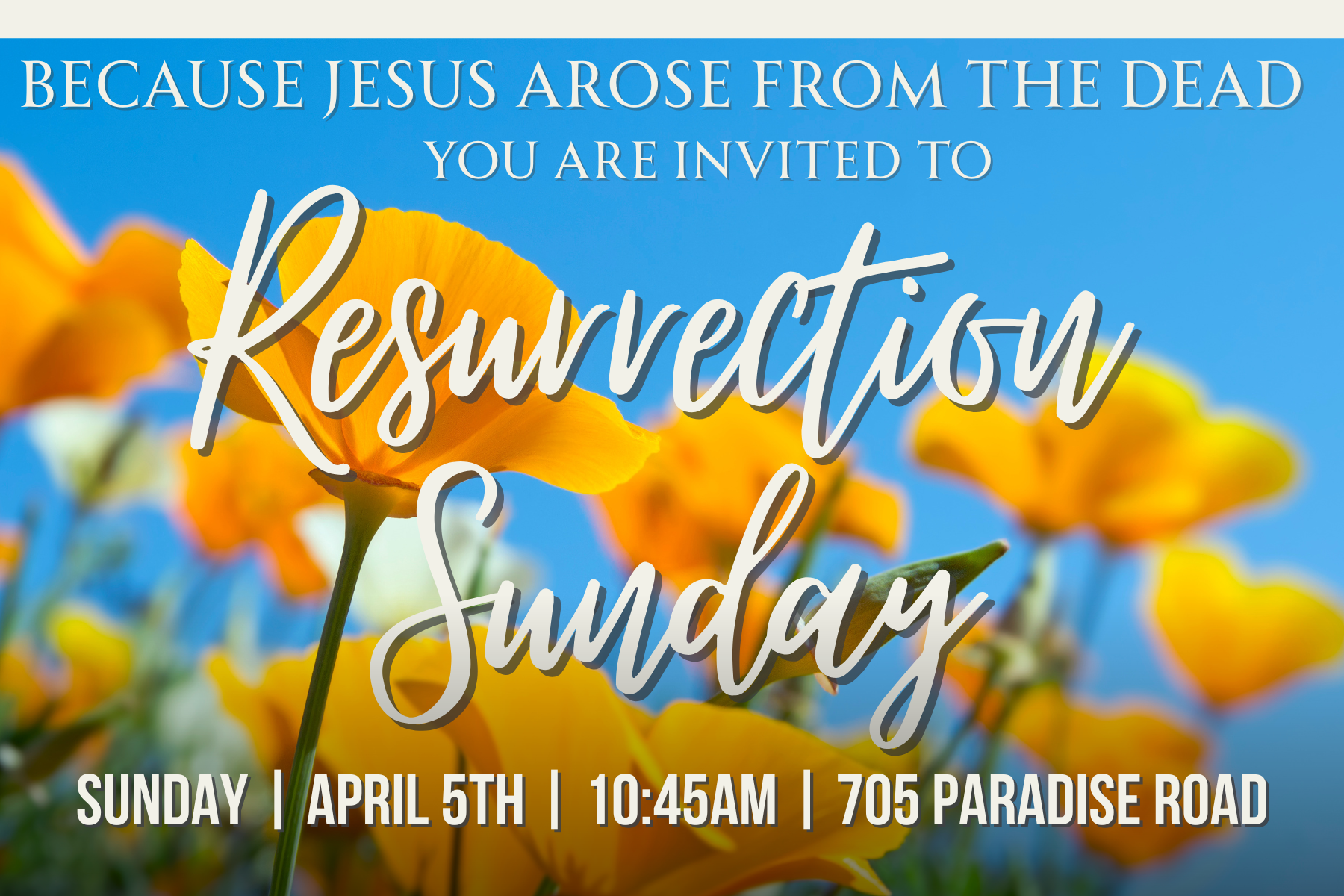
The modern hymn See, What a Morning—often called “Resurrection Hymn”—invites us not merely to sing about the resurrection, but to behold it with wonder. Written by Keith Getty and Stuart Townend, this song carries forward the great tradition of the church: to let truth shape our worship and worship deepen our grasp of truth.

“See, what a morning, gloriously bright…” The hymn begins with a summons. It calls us to look—to fix our eyes on that first Easter dawn in Jerusalem. This is not poetic imagination detached from reality; it is an invitation to step into history, to stand at the empty tomb and behold what God has done. The resurrection of Jesus Christ is not an abstract hope. It is a finished act of God in time, declaring that sin has been atoned for and death has been conquered.

As we meditate on these words, we are reminded that the resurrection cannot be separated from the cross. Christ was “crucified for our sin,” and it is precisely because His sacrifice was sufficient that He was raised in victory. As 1 Corinthians 15 teaches, if Christ has not been raised, our faith is in vain. But He has been raised—and therefore our faith rests on unshakable ground. The empty tomb is God’s “Amen” to the Son’s declaration, “It is finished.”

The hymn leads us further into the beauty of the gospel with the triumphant line: “Death is dead, love has won.” Here is the heart of Christian hope. Death, the great enemy, has been overthrown. Not merely delayed, not merely softened—but defeated. In Christ, the curse that entered through Adam has been reversed. As Romans 5 proclaims, where sin increased, grace abounded all the more. The resurrection is the dawn of that grace breaking into the world.

Yet this hymn does not leave us at the empty tomb; it draws us into its meaning for our own lives. The risen Christ is not distant. He speaks life, stirs hope, and brings peace to His people. His resurrection is the guarantee of our own. Because He lives, we too shall live. What began in that garden outside Jerusalem will one day reach its fullness when all things are made new.

In a world still marked by suffering, sin, and death, this hymn teaches us to anchor our hearts in what is already accomplished. The resurrection is not wishful thinking—it is the decisive turning point of history. Every time we sing these words, we are reminded that our hope is not fragile. It is secured in a risen Savior.

So let this hymn be more than a song on your lips. Let it be a meditation of your heart. Look again at the empty tomb. Hear again the declaration of victory. And rest in this unchanging truth: Christ is risen—and in Him, hope has dawned forever.


The Passion of Devotion Shown During Holy Week


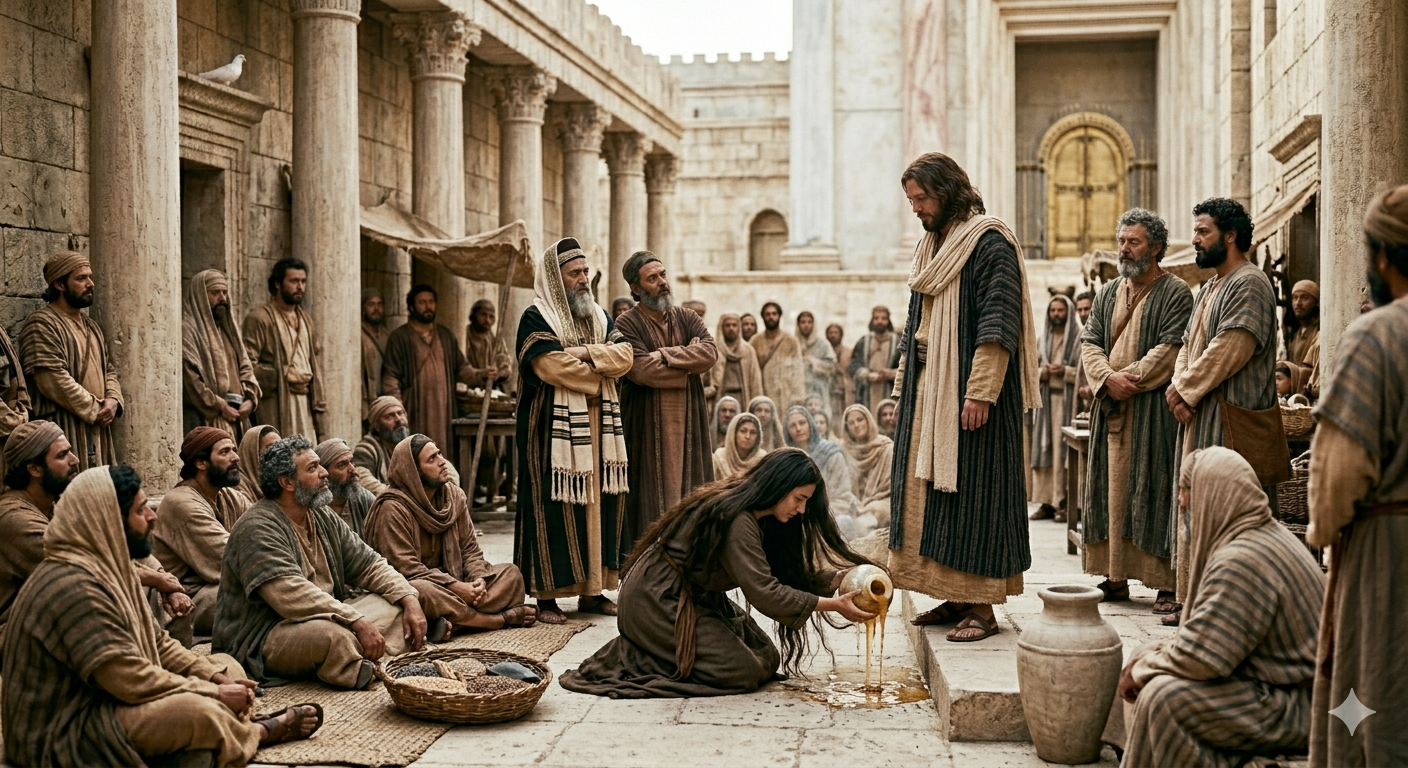
The anointing of Jesus Christ with costly perfume, recorded in the Gospels (notably John 12:1–8; Matthew 26:6–13; Mark 14:3–9), is one of the most symbolically rich acts in Passion Week. What appears, at first glance, to be an extravagant gesture of personal devotion is in fact deeply rooted in the cultural, social, and theological world of first-century Judaism.

In that context, perfume—especially nard—was extraordinarily valuable, often imported and worth a year’s wages. It was commonly associated with honor, celebration, and at times burial preparation. To pour such perfume out was to make a public statement of worth: the recipient was deemed supremely valuable. When the woman anoints Jesus, she is not merely showing affection; she is declaring His surpassing worth in a way that transcends words.

The act of wiping His feet with her hair intensifies the moment. In Jewish culture, a woman’s hair was considered part of her dignity and modesty. To loosen it in public and use it in this way would have been seen as deeply humbling, even socially risky. This is an act of self-abasement and reverence. She lowers herself to the position of a servant, performing a task typically reserved for the lowliest household slave—washing the feet of guests dirtied by travel.

Symbolically, the act points in two directions. First, it anticipates Jesus’ death. As He Himself interprets it, the anointing prepares His body for burial. In a week moving steadily toward the cross, this moment stands as a quiet acknowledgment of what others fail to grasp. Second, it foreshadows the inversion of power that defines His kingdom. Soon, Jesus will wash His disciples’ feet, embodying servant leadership. Here, however, the roles are reversed: a disciple recognizes His true identity and responds with sacrificial devotion.

The criticism of the act—particularly its perceived waste—reveals a competing value system. Where others see excess, Jesus sees beauty. Where others calculate cost, He affirms worship.

In the end, this moment is not about perfume. It is about rightly recognizing the worth of Christ—and responding without reservation.


The Parables Behind the Passion Week


Parables of Confrontation: What Jesus Meant on Day Three

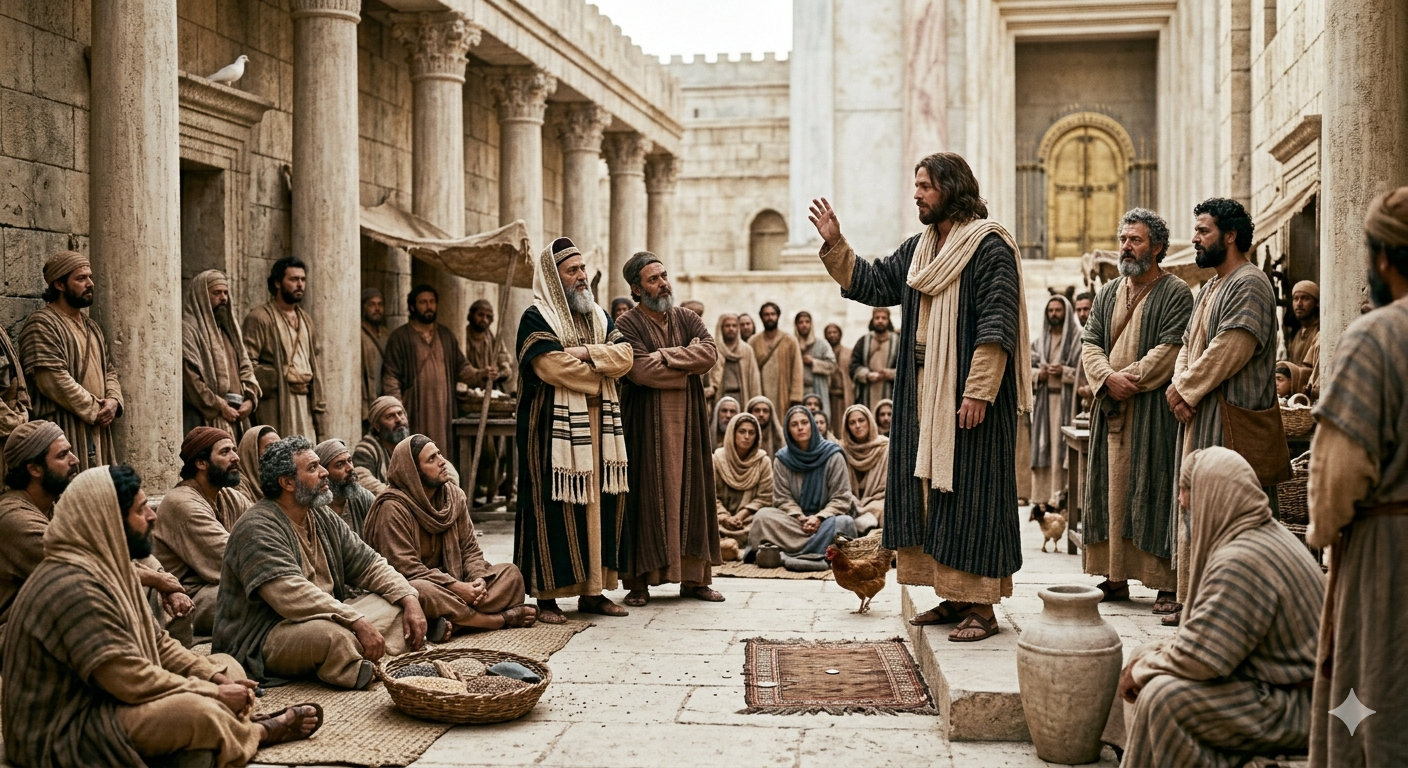
On the third day of Passion Week, Jesus Christ delivers a series of parables that are anything but neutral illustrations. They function as pointed indictments against Israel’s religious leadership and as theological summaries of redemptive history. Chief among them are the Parable of the Two Sons (Matthew 21:28–32), the Wicked Tenants (Matthew 21:33–46), and the Wedding Feast (Matthew 22:1–14). Together, they expose hypocrisy, announce judgment, and redefine who truly belongs to the kingdom of God.

The Parable of the Two Sons contrasts profession with obedience. One son verbally refuses his father but later obeys; the other agrees outwardly but fails to act. Jesus applies this directly to the religious leaders, who claim allegiance to God yet reject His purposes, while tax collectors and sinners—initially disobedient—repent and believe. The message is clear: covenant membership is not secured by words or status, but by repentance and obedience.

The Parable of the Wicked Tenants deepens the indictment. A landowner sends servants to collect fruit from his vineyard, but the tenants beat and kill them. Finally, he sends his son, whom they murder in an attempt to seize the inheritance. The symbolism is unmistakable. The vineyard represents Israel (echoing Isaiah 5), the servants are the prophets, and the son is Jesus Himself. This parable not only recounts Israel’s history of rejecting God’s messengers but also predicts the imminent rejection and death of the Son. The result is judgment: the kingdom will be taken from these leaders and entrusted to others who will bear fruit.

The Parable of the Wedding Feast expands the scope. Those originally invited refuse to come, even mistreating the king’s servants. The invitation is then extended to all, both “bad and good.” Yet even here, entrance requires proper attire—symbolizing righteousness. The lesson is twofold: Israel’s rejection opens the door to the nations, but inclusion in the kingdom still demands transformation.

Taken together, these parables declare that outward religion without fruit invites judgment, that rejecting the Son brings decisive consequences, and that God’s kingdom will be filled not by the presumed insiders, but by those who respond in faith and obedience.


The Prophecy Behind Passion Week


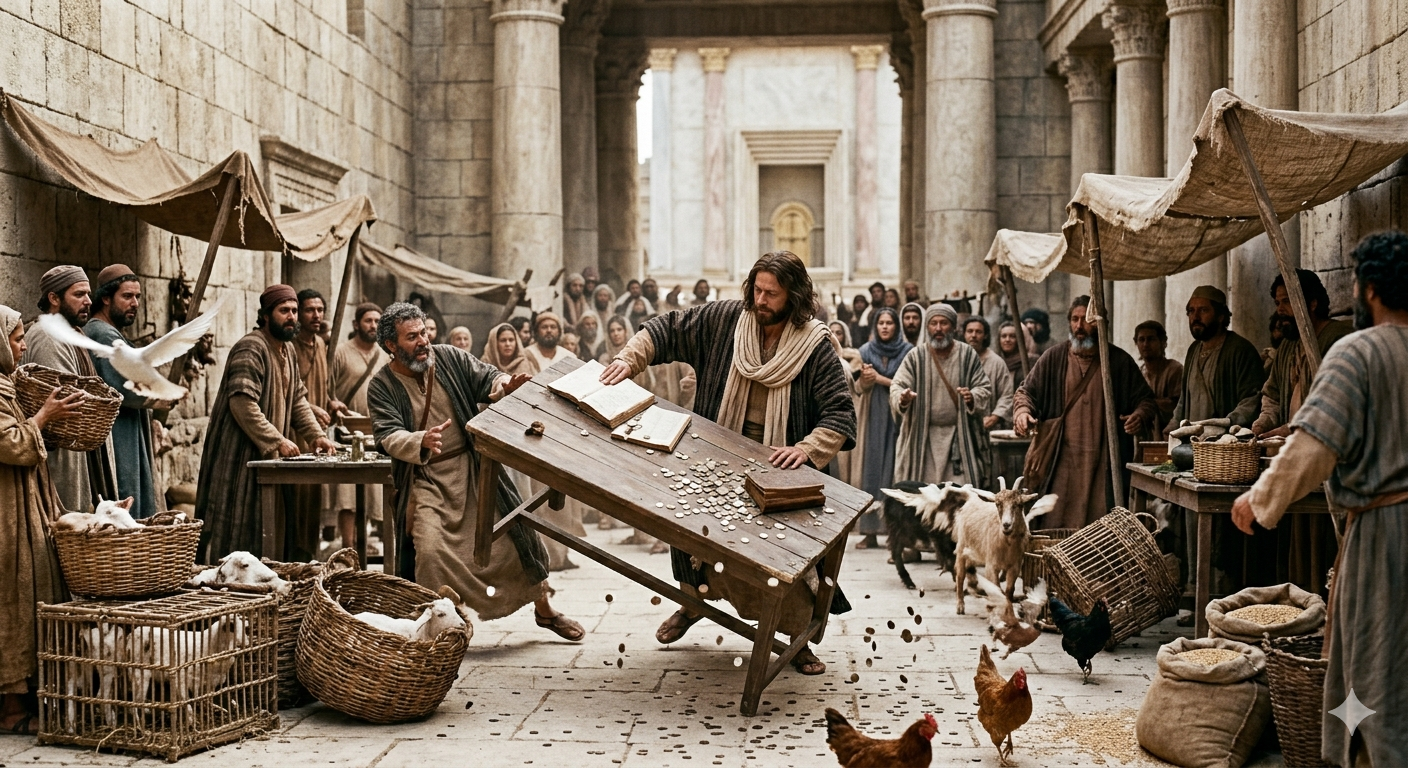
The events recorded in Matthew 21:12–22, Mark 11:12–19, and Luke 19:45–48 are best understood not as isolated acts, but as the continuation—and climax—of Old Testament prophetic patterns tied to covenant accountability.

First, the temple cleansing is explicitly rooted in prophetic expectation. When Jesus Christ quotes Isaiah 56:7 (“house of prayer”) and Jeremiah 7:11 (“den of robbers”), He is invoking two key covenant themes. Isaiah envisioned a restored temple open to the nations—true worship rightly ordered under God. Jeremiah, however, warned that outward temple activity could not shield a disobedient people from judgment. In Jeremiah’s day, the people treated the temple as a guarantee of safety while violating God’s law. The result was destruction. By combining these texts, Jesus is saying: you have failed the covenant in the same way—and the same judgment is coming.

Second, the fig tree cursing functions as a prophetic sign-act, a method frequently used by Old Testament prophets. Figures like Jeremiah and Ezekiel performed symbolic actions to dramatize divine judgment. The fig tree, full of leaves but barren of fruit, draws directly from prophetic imagery (e.g., Hosea 9:10; Micah 7:1), where Israel is depicted as fruitless despite covenant privilege. Under the Mosaic covenant, fruitfulness—justice, righteousness, obedience—was expected (cf. Deut. 28). The absence of fruit signaled covenant breach and impending curse.

Third, both events together point to covenant lawsuit language. In the Old Testament, God often brings a “case” against His people (Isaiah 1; Micah 6), presenting evidence of their unfaithfulness before executing judgment. Jesus’ actions serve as both indictment and verdict: the temple is corrupt, the people are fruitless, and the consequences are imminent.

Finally, these acts anticipate transition in redemptive history. The temple, central to the old covenant system, is being judged because it no longer fulfills its purpose. Implicitly, Jesus positions Himself as the true locus of God’s presence and the mediator of a new covenant.

In short, these events are saturated with Old Testament expectation: prophetic warning, covenant accountability, symbolic judgment, and the announcement that God is about to act decisively against unfaithfulness.


Palm Sunday: Welcoming Christ as King


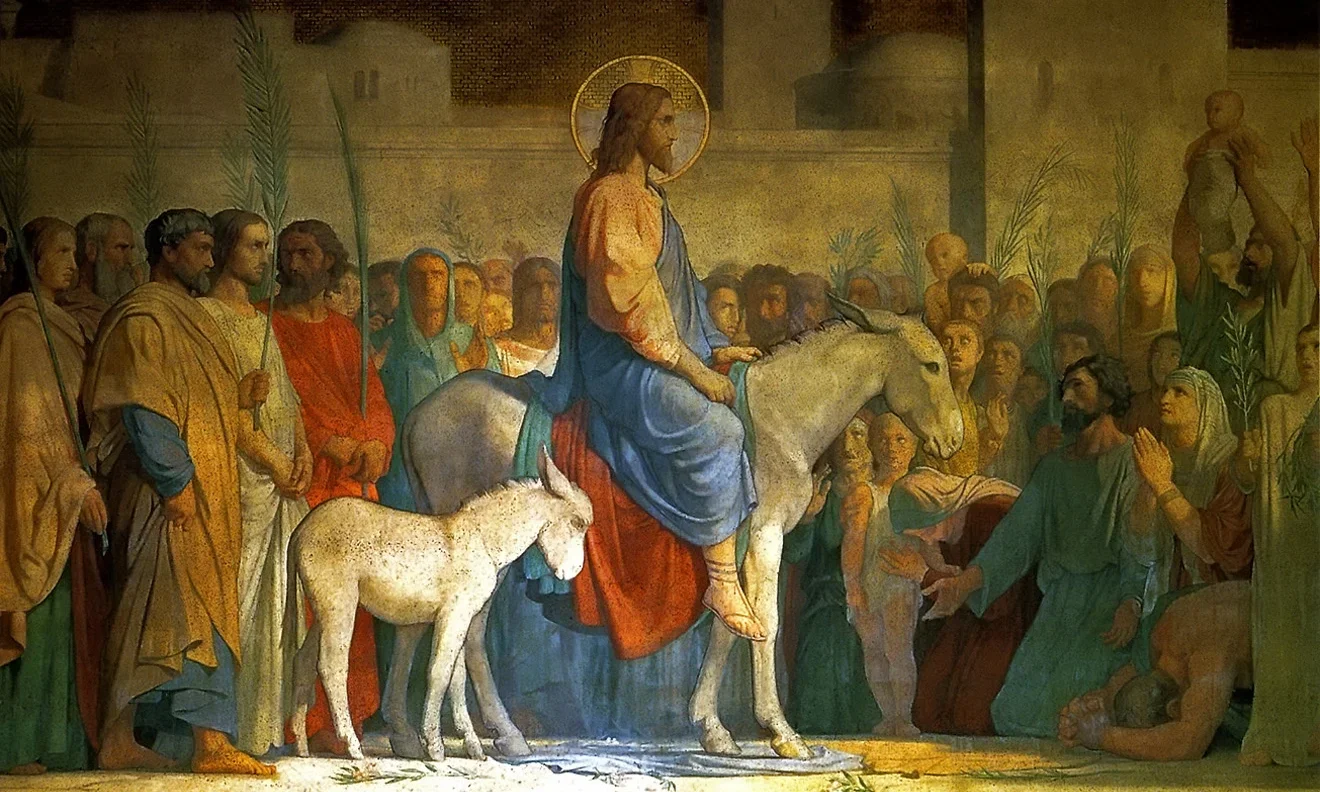
Palm Sunday opens Holy Week, commemorating both Jesus’ triumphal entry into Jerusalem and the beginning of His suffering. It is a vivid, dramatic day in the Christian calendar, even for those who rarely engage in liturgy. With palms waving, hymns rising, and the Passion narrative read aloud, we experience a striking contrast: one moment we shout “Hosanna!” in praise, and the next we cry “Crucify Him!” This juxtaposition mirrors the paradox of Christ’s kingship and the complexities of our spiritual lives, where triumph and suffering, joy and sin, coexist.

The tradition of Palm Sunday began in the early Church, which built on the Jewish custom of commemorating God’s saving acts. By the fourth century, Christians in Jerusalem reenacted Jesus’ entry, waving palms, singing hymns, and visiting holy sites. As the practice spread through Europe, blessings of palms and public processions became formalized by the eighth century. Where palms were unavailable, other plants or flowers were used, and processions were often led by a bishop, the Gospel Book, a crucifix, or an image of Jesus riding a donkey. The hymn “All Glory, Laud, and Honor,” written by St. Theodulf in the ninth century, eventually became central to the celebration.

Palm Sunday also fulfills prophecy. In the Gospels, Jesus’ entry into Jerusalem fulfills Zechariah’s prediction of a humble yet triumphant king riding a donkey. This recalls the story of Solomon, paraded into Jerusalem as the rightful heir to David’s throne. By entering the city this way, Jesus declares Himself the true Son of David—the King who saves His people and challenges worldly powers.

Christ’s kingship extends beyond the spiritual to every area of life. Pope Pius XI, in Quas Primas, emphasized that Christ’s authority covers homes, workplaces, communities, and governments. Honoring Christ as King means submitting every part of life to Him, ordering our actions and priorities according to His will. Palm Sunday reminds us that His reign is not only over our hearts, but over the whole created order.

The celebration also points us to the cross. Though the crucifixion was meant to humiliate and punish, it paradoxically serves as Christ’s throne, demonstrating true victory. St. Paul writes that Christ “disarmed” the powers of the world through His triumph on the cross (Colossians 2:15). By pairing Jesus’ triumphal entry with His Passion, the Church shows that His power is expressed not through force or politics, but through humility, sacrificial love, and obedience to God.

Palm Sunday teaches spiritual honesty. The quick shift from praise to condemnation in the liturgy reflects our own lives: we exalt Christ one moment and fall into sin the next. Christian life is not always triumphant, but it is a discipline of turning to the cross, rejecting sin, and embracing the fruits of the Spirit: love, joy, peace, patience, kindness, goodness, faithfulness, gentleness, and self-control (Galatians 5:22-23).

Ultimately, Palm Sunday calls us to welcome Christ fully—not just as Savior but as King over all. It asks us to examine our allegiances, surrender every area of life to His authority, and live in a way that declares, “Hosanna! Blessed is He who comes in the Name of the Lord!” As we reflect on His triumph and suffering, we are reminded that following Christ means ordering our hearts, homes, and communities under His kingdom. Palm Sunday is a call to recognize the King who reigns over all, and to live as faithful subjects of His eternal rule.


Our Hymnal: What A Friend we Have In Jesus


What a Friend We Have in Jesus: The Theology Behind Hymn #263

Few hymns have endured with the warmth and simplicity of What a Friend We Have in Jesus. Its familiarity can sometimes dull its depth, yet beneath its gentle melody lies a profoundly biblical and pastoral theology. Written out of personal grief and hardship, the hymn presents not sentimental religion, but a robust vision of the Christian life centered on communion with Christ through prayer.

At its heart, the hymn teaches that Jesus Christ is not distant or inaccessible, but a true and present friend to His people. This is no casual metaphor. It reflects the astonishing claim of the gospel—that the holy and sovereign Lord draws near to sinners through redemption and invites them into relationship. The believer is not merely forgiven, but welcomed. Christ bears our burdens, sympathizes with our weaknesses, and remains faithful in every circumstance. In a world where human relationships are fragile and often unreliable, the hymn points to a friend who never fails.

Flowing from this truth is the hymn’s central emphasis on prayer. The famous line—“Oh what peace we often forfeit, oh what needless pain we bear, all because we do not carry everything to God in prayer”—serves as both comfort and rebuke. It comforts by reminding believers that peace is available; it rebukes by exposing how often that peace is neglected. The problem is not that God is unwilling to help, but that we are often unwilling to ask. Prayer is portrayed not as a ritual duty, but as a lifeline—an open invitation to bring every burden, fear, and temptation before the Lord.

The hymn also offers a realistic view of the Christian life. It does not deny trials, temptations, or sorrow. Instead, it assumes them. “Are we weak and heavy laden, cumbered with a load of care?” is not a hypothetical question—it is the normal experience of believers living in a fallen world. Yet the answer remains consistent: take it to the Lord in prayer. The Christian hope is not found in escaping difficulty, but in bringing every difficulty into the presence of Christ, who is sufficient in all things.

Additionally, the hymn gently confronts the tendency toward self-reliance. Many believers attempt to carry their burdens alone, turning inward or depending solely on others. While human friendship is a gift, it is ultimately limited. The hymn contrasts this limitation with the perfect faithfulness of Christ. There is no burden too heavy, no sorrow too deep, and no sin too great that cannot be brought to Him.

Ultimately, What a Friend We Have in Jesus teaches that the Christian life is one of continual dependence. It calls believers away from anxiety and isolation and into a life marked by trust, prayer, and fellowship with Christ. Its message is simple, but not shallow: peace is found not in circumstances, but in communion with a faithful Savior.


A Fresh Look for the North Alleyway


The north alleyway has long been an eyesore and a source of ongoing problems—but not anymore. Thanks to a recent church workday and continued efforts afterward, the space has been transformed into something… almost attractive.

While an alleyway may never win any beauty awards, this is a major improvement.

A big thank you to Patrick Corkwell and his son Judah, along with Noah and Jacob Bird, for giving the area a fresh coat of paint. We’re also grateful to Raymond Nimmer, who hauled 12 wheelbarrow loads of mulch around the property—greatly reducing future weed issues.

Next, we plan to place decorative boulders along the wall to prevent parking and discourage anyone from attempting to access the roof. And who knows—perhaps someone with a green thumb will help us take it one step further by adding some plants to complete the transformation.

Keep in mind that appearances matter. We are communicating to our community that we are intentional about every detail as we pursue excellence. This much is worthy of our Lord and way to let other people know He is worthy of their best as well.

What you can’t see is that beneath the new mulch, weed cloth, and dirt lies a newly installed French drain. We had this professionally installed to protect our buildings from the annual flooding we’ve experienced in our office building and fellowship hall. In addition, the alleyway has been regraded so that runoff is directed into the drain. This should eliminate the standing puddles of muddy water we’ve dealt with in the past.

You might not realize that about 25 kids use this alleyway on their way to school. We’ve watched them trudge through the muck and mud—hopefully, this improvement means those days are behind them. This is one small way we’re seeking to love our community while also investing in better, more functional facilities.


On Communion


Every covenant that God establishes is accompanied by a sign or symbol. By definition, a covenant is a solemn promise of God to His people, grounded in His character and faithfulness. In the Old Testament, we see this clearly: the global flood would never again destroy the earth, and the sign of this promise was the rainbow. Abraham and his descendants were chosen as God’s covenant people, promised a land, a people, and blessing; the sign of this covenant was circumcision. The Mosaic covenant was accompanied by the Sabbath, a sign of God’s rest and faithfulness. The pattern is unmistakable: every divine promise or covenant in Scripture is confirmed by a visible sign or symbol.

This covenantal pattern continues and finds its fulfillment in Christ. Jesus inaugurates a new and better covenant. At the Last Supper, He declared:

“And he took bread, and when he had given thanks, he broke it and gave it to them, saying, ‘This is my body, which is given for you. Do this in remembrance of me.’ And likewise the cup after they had eaten, saying, ‘This cup that is poured out for you is the new covenant in my blood.’” [Luke 22:19–20]

Notice carefully the two elements: the bread and the cup. The bread is not the sign of the New Covenant; it is a memorial of Christ Himself, calling us to remember His person and work. The cup, by contrast, is the explicit sign of the New Covenant, sealed in His blood. In these elements, Jesus invites us to remember the condition from which we were saved—sinners in need of mercy—and to reflect on the covenant promise of salvation. Every time we partake, we participate in a covenant renewal, recalling both God’s promise and our call to faithful obedience.

It is crucial to understand that when we speak of Communion as a sacrament of covenant renewal, we do not imply that God needs to renew His covenant with us. The covenant of redemption, ratified in Christ’s death, is irrevocable and eternally secure. When Jesus cried out, “It is finished!” He accomplished the covenant, fully effecting salvation for His people. What is renewed is not God’s promise, but our apprehension of it—our faith and gratitude. Covenant renewal is necessary because we are forgetful, prone to doubt, and slow to remember God’s faithfulness.

Martin Luther explains the irrevocability of God’s covenant well:

“Not every vow is called a testament, but only a last irrevocable will of one who is about to die, whereby he bequeaths his goods, allotted and assigned to be distributed to whom he will. Just as St. Paul says to the Hebrews, a testament must be made operative by death… Therefore, wherever in Scripture God’s testament is referred to by the prophets, they are taught that God would become man and die and rise again, so that His Word, in which He promised such a testament, might be fulfilled and confirmed… That little word ‘testament’ is a summary of all God’s wonders and grace fulfilled in Christ.” (Works, Vol. 1, pp. 233–234)

To deny God’s covenant would be to deny the testament ratified by Christ’s blood. This is the believer’s strongest assurance: God will never break His Word. We are called to remember this covenant faithfully, which is precisely the purpose of the bread and the cup: to remind us, renew our hearts, and strengthen our covenantal faithfulness.

The New Covenant at the Last Supper can be understood in six covenantal elements:

  1. The issuer of the covenant: Jesus Christ

  2. The recipients of the covenant: His people, the Church

  3. The content of the covenant: “This is my body… This is my blood… a new covenant”

  4. The sign of the covenant: The bread and the cup

  5. The blessing of the covenant: Redemption and forgiveness of sins

  6. The obligation of the covenant: To remember Christ and live in covenantal obedience, walking in His grace and truth (cf. 1 Corinthians 11:26)

Thus, Communion is far more than a remembrance of Christ; it is a covenantal act. Each time we partake, we acknowledge the work of Christ, affirm the promises of the New Covenant, and renew our commitment to covenantal faithfulness, empowered by the Holy Spirit, to live in obedience to God’s Word.


Our Hymnal: It is Well With My Soul Hymn 687


Few hymns in the Christian tradition are as deeply intertwined with personal tragedy and theological conviction as It Is Well with My Soul. Written in 1873 by Horatio Spafford, the hymn stands as a testimony to faith forged in suffering and rooted in the sovereignty of God.

Spafford was a successful Chicago attorney and a committed Presbyterian layman. Yet within a short span of years, his life was marked by devastating loss. In 1871, the Great Chicago Fire destroyed much of his real estate investments, severely impacting his finances. Two years later, seeking rest and renewal, Spafford arranged for his wife, Anna Spafford, and their four daughters to sail to Europe ahead of him. Their ship, the SS Ville du Havre, collided with another vessel in the Atlantic and sank rapidly. All four daughters drowned. Anna survived and sent her husband a telegram bearing only two words: “Saved alone.”

As Spafford crossed the Atlantic to join his grieving wife, the ship’s captain informed him when they were near the location where his daughters had perished. It was there, according to tradition, that Spafford penned the words that would become one of the most beloved hymns in Christian worship: “When peace like a river attendeth my way, / When sorrows like sea billows roll.” The opening lines capture the paradox of the Christian life—peace and sorrow, providence and pain, held together under the rule of God.

The hymn’s enduring power, however, lies not merely in its backstory but in its theological depth. It affirms divine sovereignty: “Whatever my lot, Thou hast taught me to say, It is well, it is well with my soul.” Spafford does not deny the reality of suffering; instead, he confesses that even in unimaginable loss, God remains trustworthy. The hymn also celebrates the heart of the gospel: “My sin—oh, the bliss of this glorious thought! / My sin, not in part but the whole, / Is nailed to the cross, and I bear it no more.” Here, personal grief is placed in the larger context of redemption. The worst earthly tragedy cannot overturn the greater victory accomplished at Calvary.

The tune was composed by Philip Bliss, who fittingly named it “Ville du Havre” in remembrance of the lost ship. Tragically, Bliss himself would die only three years later in a train accident, adding yet another layer of sorrow to the hymn’s history. Yet the music, like the text, carries a restrained dignity that matches its message of steadfast hope.

Over the decades, It Is Well with My Soul has transcended denominational boundaries. It is sung in Baptist, Presbyterian, Methodist, and countless other churches. Frequently used at funerals, it provides language for lament without despair. It neither trivializes pain nor surrenders to it. Instead, it directs the believer’s gaze beyond present affliction to the coming day “when faith shall be sight, the clouds be rolled back as a scroll.”

In an age that often equates blessing with comfort, this hymn offers a countercultural confession: peace is not the absence of sorrow but the presence of Christ. Born from the depths of grief, It Is Well with My Soul continues to testify that even when sorrows roll like sea billows, the soul anchored in the gospel can say, by grace, “It is well.”


Communion Fellowship: Why We Do What We Do


I doubt you’ve ever been to a church that does what we do. A few times a year we upend the tradition Sunday model and head to our fellowship hall for a service we call Communion Fellowship. Here we attempt to put into practice what we see in the early church according to the book of Acts. Since we are a Small Church we are able to accommodate our entire community in a service that is born directly out of the example set by the first churcehs.

The earliest Christian church services were shaped by Jewish synagogue worship, the teaching of the apostles, and the institution of the Lord’s Supper by Christ. The clearest biblical snapshot appears in Acts 2:42: “And they devoted themselves to the apostles’ teaching and the fellowship, to the breaking of bread and the prayers.” From this brief summary, along with other New Testament passages, we can reconstruct the basic structure and character of the earliest gatherings.

First, apostolic teaching stood at the center of Christian worship. The church gathered to hear the Word of God explained in light of Christ’s death and resurrection. Acts 20:7 describes believers assembling on the first day of the week to hear Paul preach. This pattern likely developed out of synagogue practice, where Scripture was read and expounded. The difference, however, was that the apostles proclaimed Jesus as the fulfillment of the Law and the Prophets. Christian worship was therefore Word-centered from the beginning.

Second, prayer was a defining feature of these gatherings. Acts repeatedly shows believers praying corporately (Acts 2:42; 4:24–31). These prayers likely included Psalms, petitions, thanksgiving, and intercessions. Paul later instructs churches to sing “psalms and hymns and spiritual songs” (Ephesians 5:19; Colossians 3:16), indicating that singing was also part of corporate worship. The earliest services were therefore participatory and saturated with Scripture.

Third, and most significant for understanding early church structure, was “the breaking of bread.” This phrase can refer generally to a meal, but in several contexts it clearly points to the Lord’s Supper. In Acts 20:7, believers gathered specifically “to break bread” on the first day of the week, suggesting that the Supper was a central purpose of the assembly.

Importantly, the New Testament indicates that the Lord’s Supper was originally connected to a larger communal meal. Acts 2:46 describes believers sharing food together with gladness and generosity. The strongest evidence appears in First Epistle to the Corinthians 11:17–34, where Paul rebukes the Corinthian church for divisions during their gathering. Some were eating ahead of others, the wealthy were feasting, and the poor were left hungry. Such abuses only make sense if the Lord’s Supper was embedded within a broader shared meal—often referred to as a “love feast.” Paul’s correction did not abolish the Supper but clarified its sacred meaning and communal responsibility.

Over time, however, the full congregational meal appears to have been separated from the sacramental observance. As churches grew and logistical challenges increased, and as abuses such as those in Corinth persisted, it became prudent to distinguish the sacramental elements from an ordinary meal. By the mid-second century, Justin Martyr describes Christian worship as including Scripture readings, a sermon, prayers, and the Lord’s Supper—without mention of a common meal. This suggests that the church retained Word and Table as central while discontinuing the larger feast.

The earliest Christian services, then, were Word-centered, prayer-filled, and marked by both fellowship and sacrament. They were covenantal gatherings of a redeemed community meeting weekly—typically on Sunday—to hear Christ proclaimed and to remember His death through bread and wine. While later liturgical forms became more structured, they preserved the essential pattern already visible in the New Testament: teaching, prayer, and the Lord’s Supper at the heart of Christian worship.


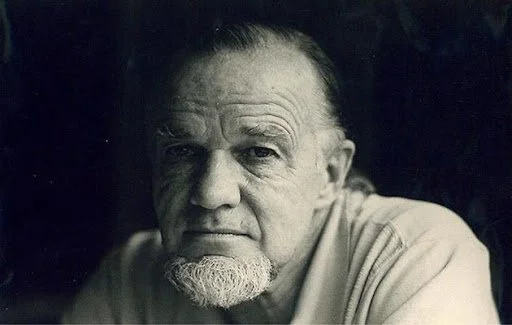
Francis Schaeffer's Christian Worldview and the New Apostolic Reformation


Though they frequently share the same vocabulary, their definitions come from different dictionaries. Shaefferian thought utter rejects NAR.

In recent years, various movements within evangelicalism have appealed to “worldview,” “cultural engagement,” and “Christian influence” language popularized by Francis A. Schaeffer. Among these is the movement commonly known as the New Apostolic Reformation (NAR). While NAR proponents often echo Schaeffer’s concern for cultural decline and Christian responsibility, the theological framework of NAR fundamentally contradicts Schaeffer’s epistemology, doctrine of revelation, and understanding of the church. As a result, appeals to Schaeffer in defense of NAR theology represent a serious misappropriation of his work and intent.

At the center of Schaeffer’s entire apologetic and worldview project was the conviction that Christianity is objectively true because God has spoken. Against both secular humanism and religious mysticism, Schaeffer insisted that biblical Christianity rests upon propositional, verbal revelation given by an infinite-personal God. He stated plainly, “The true Christian position is that the infinite-personal God has spoken to man in propositional, verbalized form.”¹ For Schaeffer, Scripture was not a record of subjective religious experience but God’s public, authoritative communication to humanity. He warned that once Christianity abandons objective revelation, it inevitably collapses into subjectivism, insisting that “once you cross the line from reason to non-reason, you are no longer talking about truth.”² This commitment to objective revelation placed Schaeffer firmly within the Reformation principle of sola Scriptura, even as he engaged philosophy, culture, politics, and art.

One of Schaeffer’s most enduring analytical contributions was his critique of the modern “upper-story / lower-story” divide. In this framework, truth, reason, and factual knowledge are confined to the lower story, while religious belief is relegated to a non-rational upper story of experience. Schaeffer identified this move as fatal to Christianity, observing that “modern man lives in the upper story of experience, separated from the lower story of reason and fact.”³ When religious authority is grounded in personal experience—visions, impressions, or prophetic utterances—rather than Scripture, Christianity loses its claim to truth and becomes indistinguishable from mysticism. This critique applies directly to NAR theology. Despite verbal affirmations of biblical authority, NAR teaching regularly elevates prophetic revelation, apostolic insight, and subjective spiritual impressions as authoritative guidance for the church. Even when described as “non-canonical,” such revelations function authoritatively in practice, placing them squarely within the upper-story epistemology Schaeffer warned against.

Schaeffer was explicit that Christianity is grounded in what God has already revealed, not in ongoing revelatory authority. He emphasized that “the Bible is not a collection of religious experiences, but a body of truth communicated by God,”⁴ and further insisted that “Christianity is not a series of personal experiences, however real, but truth concerning what God has done in history.”⁵ NAR’s insistence on present-day apostles and prophets who receive strategic revelation for the church represents a functional denial of the sufficiency of Scripture. This is not a minor doctrinal disagreement but a direct challenge to the foundation of Christian authority as Schaeffer understood it.

A defining mark of Schaeffer’s worldview thinking was his insistence on antithesis—the sharp distinction between biblical Christianity and all competing systems of thought. He wrote, “There is a line of antithesis between Christianity and all non-Christian thought.”⁶ Christianity, for Schaeffer, could not coexist with alternative authority structures without surrendering its truth claims. Any movement that introduces parallel sources of authority stands outside the bounds of biblical Christianity. NAR’s apostolic hierarchies, prophetic networks, and alignment structures introduce precisely such competing authorities. These systems inevitably relativize Scripture by subjecting the church to leaders who claim special revelation or divine mandate beyond the written Word.

Although Schaeffer strongly believed Christians must engage culture, he rejected triumphalist or utopian expectations of cultural transformation prior to the return of Christ. He warned that “the Christian is not called to total withdrawal, nor to the illusion of a perfect society before Christ returns,”⁷ and cautioned further that “there are no utopias this side of heaven.”⁸ NAR’s dominionist impulses, often expressed through kingdom-now theology or the Seven Mountain Mandate, conflict with Schaeffer’s sober eschatology. Where NAR anticipates societal conquest through spiritual authority and apostolic strategy, Schaeffer anticipated faithful witness amid cultural decline, grounded in truth rather than power.

Finally, Schaeffer located the credibility of Christianity not in supernatural power displays or institutional dominance, but in truth expressed through love and obedience to Christ. He wrote, “The church is to show forth the holiness of God in the midst of the world—not by power, but by love.”⁹ For Schaeffer, the church’s calling was cruciform rather than triumphalist, marked by faithfulness, suffering, and clear truth in a fallen world. The NAR emphasis on authority, power, and spiritual governance stands in tension with this vision of Christian witness shaped by the cross.

In conclusion, while the New Apostolic Reformation may borrow Francis Schaeffer’s language of worldview and cultural engagement, it rejects the theological foundations upon which his thought rested. Schaeffer’s unwavering commitment to Scripture alone, propositional revelation, antithesis, and a non-triumphalist eschatology places him in fundamental opposition to NAR theology. This church therefore affirms that NAR teaching is incompatible with historic Reformed Baptist doctrine and represents the very form of experiential mysticism and authority-shifting that Francis Schaeffer devoted his life to warning the church against.

Footnotes

  1. Francis A. Schaeffer, Escape from Reason (Downers Grove, IL: InterVarsity Press, 1968), chap. 4.

  2. Ibid.

  3. Ibid.

  4. Francis A. Schaeffer, He Is There and He Is Not Silent (Wheaton, IL: Tyndale House, 1972), chap. 3.

  5. Ibid.

  6. Francis A. Schaeffer, The God Who Is There (Downers Grove, IL: InterVarsity Press, 1968), chap. 1.

  7. Francis A. Schaeffer, How Should We Then Live? (Old Tappan, NJ: Revell, 1976), chap. 13.

  8. Ibid.

  9. Francis A. Schaeffer, The Mark of the Christian (Downers Grove, IL: InterVarsity Press, 1970), 19.


And The Law Said There Shall be Two: Understanding AB506 and Mandated Reporting for Children's Ministry Leaders

California legislators have taken the issue of child abuse seriously—so seriously, in fact, that they have tightened restrictions on who may work with children, established minimum requirements to satisfy the law, and, in the process, introduced a fair amount of confusion within churches regarding who may serve in Children’s Ministry. Below is our understanding of the matter. We provide this information both for the edification of our own church, Anchored Bible Church Modesto, and as an example for other churches to follow.

We identify two basic categories of volunteers recognized by the law. For clarity, we refer to them as Class A volunteers and Class B volunteers. The distinction between these two groups is straightforward. The terms “regular” or “scheduled” define Class A volunteers, while “incidental” or “irregular” define Class B volunteers. An example is helpful: Class A volunteers are regularly scheduled Sunday School teachers, while Class B volunteers are individuals assisting at a one-day event, such as manning a game booth during a Harvest Festival.

We identify these two classes based on two laws. The first is the Child Abuse and Neglect Reporting Act (CANRA), codified in California Penal Code §§ 11164–11174.3. The second is California Business and Professions Code § 18975, commonly referred to as AB 506.

CANRA establishes that volunteers are not mandated reporters merely by virtue of being volunteers. AB 506, however, specifies when a volunteer becomes a mandated reporter. A volunteer must meet all four of the following conditions to be legally recognized as a mandated reporter:

  1. Works for a youth services organization

  2. Is 18 years of age or older

  3. Has direct contact with or supervision over children

  4. Has more than 16 hours per month, or 32 hours per year, of contact with children

Volunteers who meet all four criteria are mandated reporters under the law and therefore satisfy the requirement that each children’s ministry classroom be staffed by two mandated reporters.

Class A volunteers are those who meet the legal criteria for mandated reporters, fulfill the two–mandated-reporter requirement per classroom, and serve as regularly scheduled Children’s Ministry volunteer leaders.

Class B volunteers are incidental, irregular, or event-based volunteers who do not serve on an ongoing basis and do not lead a children’s ministry class or program.

All volunteers, regardless of classification, will undergo child abuse recognition training and mandated reporter orientation. Both classes will be treated as mandated reporters for training and policy purposes, though only Class A volunteers will be required to act as mandated reporters under the law.

This understanding, we believe, meets the statutory requirements, provides clarity to our community regarding volunteer expectations, establishes consistent training standards, and demonstrates our proactive, good-faith effort to protect the youngest among us.

Our Hymnal: The Power of the Cross Hymn 821


“The Power of the Cross” is a modern Christian hymn that tells the story of Jesus’ death on the cross and what it means for believers. Even though it was written recently, in 2005, it focuses on the oldest and most important story in the Bible: the gospel. The hymn was created by Keith Getty and Stuart Townend, two songwriters who wanted to help churches sing songs that teach clear truths about God, Jesus, and salvation. They noticed that many modern worship songs often focus on feelings but don’t always explain important Bible teachings about sin, forgiveness, and the cross. “The Power of the Cross” was written to fill that gap.

The song begins by pointing to Jesus’ journey toward the cross. The first line says, “Oh, to see the dawn of the darkest day, Christ on the road to Calvary.” This shows that Jesus didn’t just die by accident—His life had a purpose, and He willingly went to the cross to save people from sin. The hymn helps listeners understand that the cross is not just a sad event in history, but the moment God’s plan for redemption is fulfilled.

The next part of the hymn focuses on the suffering of Jesus. It explains that Jesus took on the punishment that people deserve for their sins. One line says, “the wrath of God was satisfied,” which means that God’s justice was fulfilled because Jesus took the blame for the wrong things people do. This idea is called substitutionary atonement, and it is central to Christian faith. The song shows that Jesus’ suffering was real and costly, but it also had a purpose: to rescue people and make it possible for them to be forgiven.

After describing the cross, the hymn moves toward hope and victory. It points to Jesus’ resurrection, when He rose from the dead, showing that sin and death have been defeated. The final verses remind believers that the cross changes everything. Those who trust in Jesus are forgiven and can live new lives. The hymn encourages Christians to worship God because of what Jesus did and to remember that His sacrifice gives them hope and purpose.

What makes “The Power of the Cross” special is that it combines deep Bible truths with words and music that are easy to sing and remember. It is often used in churches during Good Friday and Easter services, but it can be sung anytime to help people think about Jesus’ sacrifice. Unlike some songs that focus mostly on emotions, this hymn teaches doctrine while inspiring worship.

In short, “The Power of the Cross” is a modern hymn that tells an ancient story. It reminds Christians that Jesus went to the cross to take the punishment for sin, rose again to defeat death, and gives forgiveness and new life to all who believe in Him. Its strength comes from telling the truth about the gospel clearly, so people of all ages can understand and celebrate what Jesus has done.

If this hymn is new to you a link is provided so you can listen and learn this wonderful song.


Chilren's Ministry a Uniquely California Quandry


The unintended consequence that every church must now wrestle with is this: complying with the law is practically impossible, while noncompliance can be deeply detrimental. AB 506 requires two mandated reporters in every Children’s Ministry (CM) class, yet volunteers are not mandated reporters.

The Quandary

Here’s the quandary: how does a small church conduct children’s ministry when all it has are volunteers to run it? According to AB 506, it can’t.

So who are mandated reporters, and where can we get more of them? Mandated reporters under AB 506 include clergy, elders, and paid staff members. It is not financially possible to hire additional staff simply to meet this requirement, nor is it ethical to ordain every volunteer. Those in our church who are already mandated reporters have other duties and responsibilities. That’s a quandary indeed.

Another possible response is to look the other way and simply carry on as we always have. After all, how many churches have actually faced litigation under AB 506? Surely we are too small to be on anyone’s radar. Really—what’s the risk?

This approach quickly falls apart under the principle that ignorance is no defense. It may be true that, day to day, we could probably continue children’s ministry as we have been. In fact, a majority of churches appear to be doing exactly that.

But—and this is a very big but—if a claim of child abuse were ever filed against a church that is not AB 506–compliant (an action that is not uncommon), ignorance becomes more than “no defense.” It becomes grounds for our insurance company to deny coverage and potentially drop us altogether. It also opens church officers to personal civil liability—liability that includes costly legal defense fees and even costlier damage awards.

The Reality

The reality is that no one from the government is coming to police churches to ensure AB 506 compliance with its mandated reporter requirements. But the reality is also that child abuse is prevalent in churches, with strong legal precedent already established, in a cultural climate that both celebrates and sneers at religious institutions when they are caught. Add to this insurance companies that will quickly distance themselves from clients bearing legal liability due to noncompliance with AB 506.

Our pastor has already consulted with our insurance company, Church HR Network, and Church West Insurance. All three have made it clear that compliance with AB 506 is required for insurance coverage and legal representation. At this time, we cannot comply with the law as it is written. Therefore, in an effort to protect our pastor, our elders, the integrity of our church, and to limit the very real and dangerous liability introduced by AB 506, we are suspending all Children’s Ministry for a period of time until lega requirements can be met.

Where Do We Go from Here?

There are two options for most small to medium-small churches. First, suspend traditional children’s ministry, meet with families, assess their needs, and replaced traditional ministry with a family based ministry. There are no AB 506 requirements when it comes to parents, nor are there requirements restricting parents from gathering together. There is nothing preventing parents from gathering to invest in their children.

Second, each class needs two AB506 qualified mandated reporter volunteers. These are adults over the age of 18, who work in a youth program, have substantial regular contact with children, and who volutneer/work more than 32 hours a year. At a minimum this means 4 qualified adults comprising two teaching teams to trade off Sundays.

This Sunday our Pastor will address this issue with the church and answer any questions. We want you to be informed of what is being discussed and why. These are challenging days for ministry but let join in prayer together and ask the Lord to show us the way.

WANT MORE?

If you are so inclined you can read our analysis of the “feasibility” clause and why it’s not safe harbor justifying the continuation of the status quo. This definitely delves into the legal language and argument behind AB506 and our understanding of it’s implication for any church including our own.

You can also read our understanding of who can serve in Children’s Ministry as a required mandated reporter HERE.


Our Hymnal: When We All Get to Heaven Hymn 700


“One of the hymn’s most memorable lines, “Just one glimpse of Him in glory will the toils of life repay,” captures its central message: earthly suffering is temporary, but the joy of seeing Christ face to face is eternal. This forward-looking hope has made the hymn especially meaningful in times of hardship, funerals, and worship services focused on heaven and Christ’s return.”


The hymn “When We All Get to Heaven” is a joyful Christian song about the hope believers have in eternal life with Jesus Christ. It reminds Christians that no matter how difficult life can be, there is a future day coming when God’s people will be with Him forever. The hymn encourages believers to keep trusting Christ and looking forward to heaven with joy.

The words to the hymn were written by Eliza E. Hewitt, who lived from 1851 to 1920. Eliza Hewitt worked as a schoolteacher in Philadelphia. She loved teaching and caring for children, but her life changed when she suffered a serious spinal injury. Because of this injury, she was forced to stop teaching and spent a long time confined to her bed. This season of pain and weakness was very difficult, but it also became a time when her faith grew stronger.

While she was recovering, Hewitt spent many hours reading the Bible, praying, and writing poetry. She began turning her poems into hymn lyrics that focused on God’s promises, comfort, and the hope of heaven. Many of her hymns were shaped by her personal suffering and her deep trust in Christ. “When We All Get to Heaven,” written in 1898, reflects her strong belief that the troubles of this life are temporary and that eternal joy awaits believers.

The music for the hymn was written by Emily D. Wilson, a well-known gospel music composer. Wilson wrote melodies that were simple, joyful, and easy for congregations to sing together. Her upbeat tune perfectly matches the hopeful message of the lyrics. The repeated chorus helps worshipers remember the central truth of the hymn: heaven will be a day of great joy for all who belong to Christ.

The hymn is based on important Bible teachings about heaven. Verses like John 14:1–3, where Jesus promises to prepare a place for His followers, and Revelation 21:4, which says that God will wipe away every tear, are reflected throughout the song. One of the most well-known lines says, “Just one glimpse of Him in glory will the toils of life repay.” This means that seeing Jesus face to face will make every hardship in life worth it.

Over time, “When We All Get to Heaven” has become a favorite hymn in churches around the world. It is often sung during worship services, funerals, and times when believers need encouragement. The hymn reminds Christians to live faithfully, follow Jesus, and look forward with joy to the day when they will be with Him forever.

Is this hymn new to you? You can listen to it HERE