
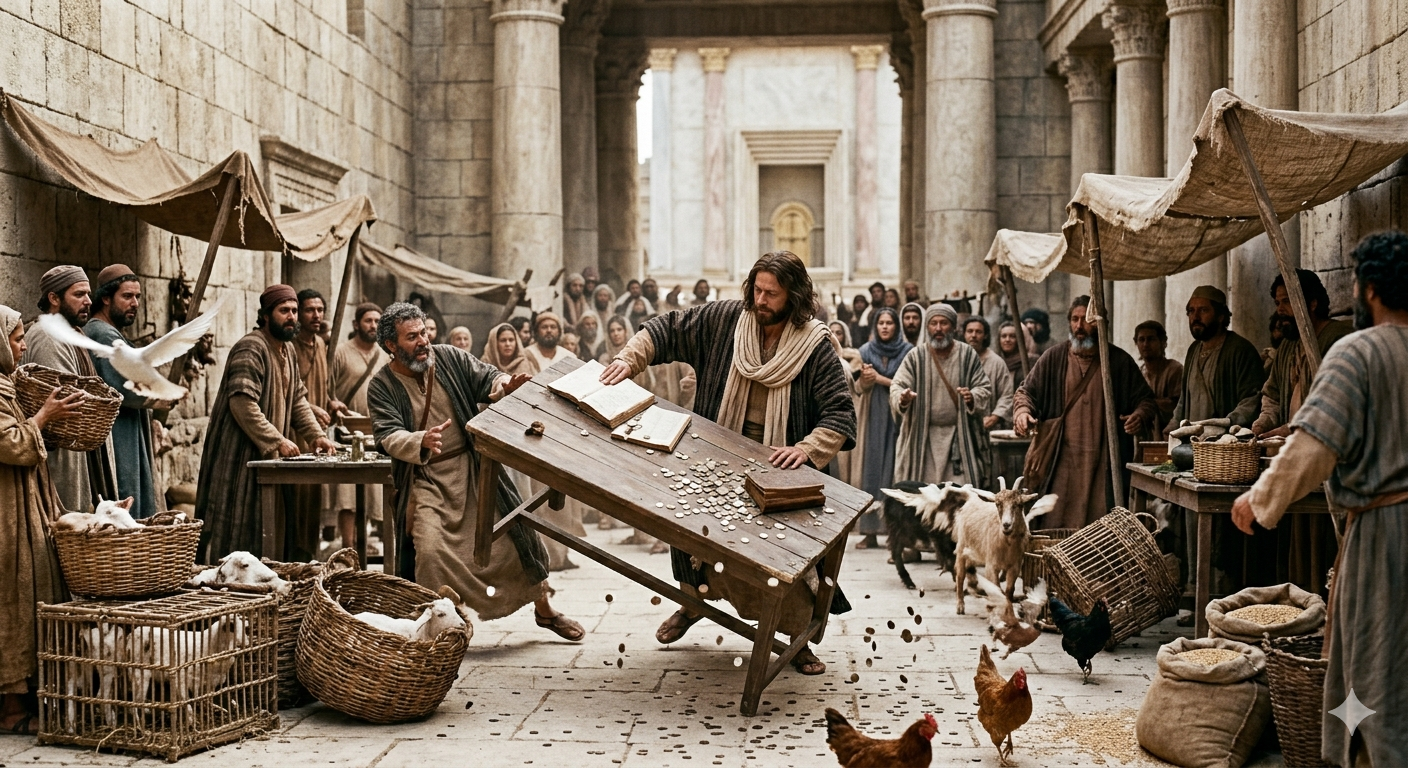
The events recorded in Matthew 21:12–22, Mark 11:12–19, and Luke 19:45–48 are best understood not as isolated acts, but as the continuation—and climax—of Old Testament prophetic patterns tied to covenant accountability.
First, the temple cleansing is explicitly rooted in prophetic expectation. When Jesus Christ quotes Isaiah 56:7 (“house of prayer”) and Jeremiah 7:11 (“den of robbers”), He is invoking two key covenant themes. Isaiah envisioned a restored temple open to the nations—true worship rightly ordered under God. Jeremiah, however, warned that outward temple activity could not shield a disobedient people from judgment. In Jeremiah’s day, the people treated the temple as a guarantee of safety while violating God’s law. The result was destruction. By combining these texts, Jesus is saying: you have failed the covenant in the same way—and the same judgment is coming.
Second, the fig tree cursing functions as a prophetic sign-act, a method frequently used by Old Testament prophets. Figures like Jeremiah and Ezekiel performed symbolic actions to dramatize divine judgment. The fig tree, full of leaves but barren of fruit, draws directly from prophetic imagery (e.g., Hosea 9:10; Micah 7:1), where Israel is depicted as fruitless despite covenant privilege. Under the Mosaic covenant, fruitfulness—justice, righteousness, obedience—was expected (cf. Deut. 28). The absence of fruit signaled covenant breach and impending curse.
Third, both events together point to covenant lawsuit language. In the Old Testament, God often brings a “case” against His people (Isaiah 1; Micah 6), presenting evidence of their unfaithfulness before executing judgment. Jesus’ actions serve as both indictment and verdict: the temple is corrupt, the people are fruitless, and the consequences are imminent.
Finally, these acts anticipate transition in redemptive history. The temple, central to the old covenant system, is being judged because it no longer fulfills its purpose. Implicitly, Jesus positions Himself as the true locus of God’s presence and the mediator of a new covenant.
In short, these events are saturated with Old Testament expectation: prophetic warning, covenant accountability, symbolic judgment, and the announcement that God is about to act decisively against unfaithfulness.