
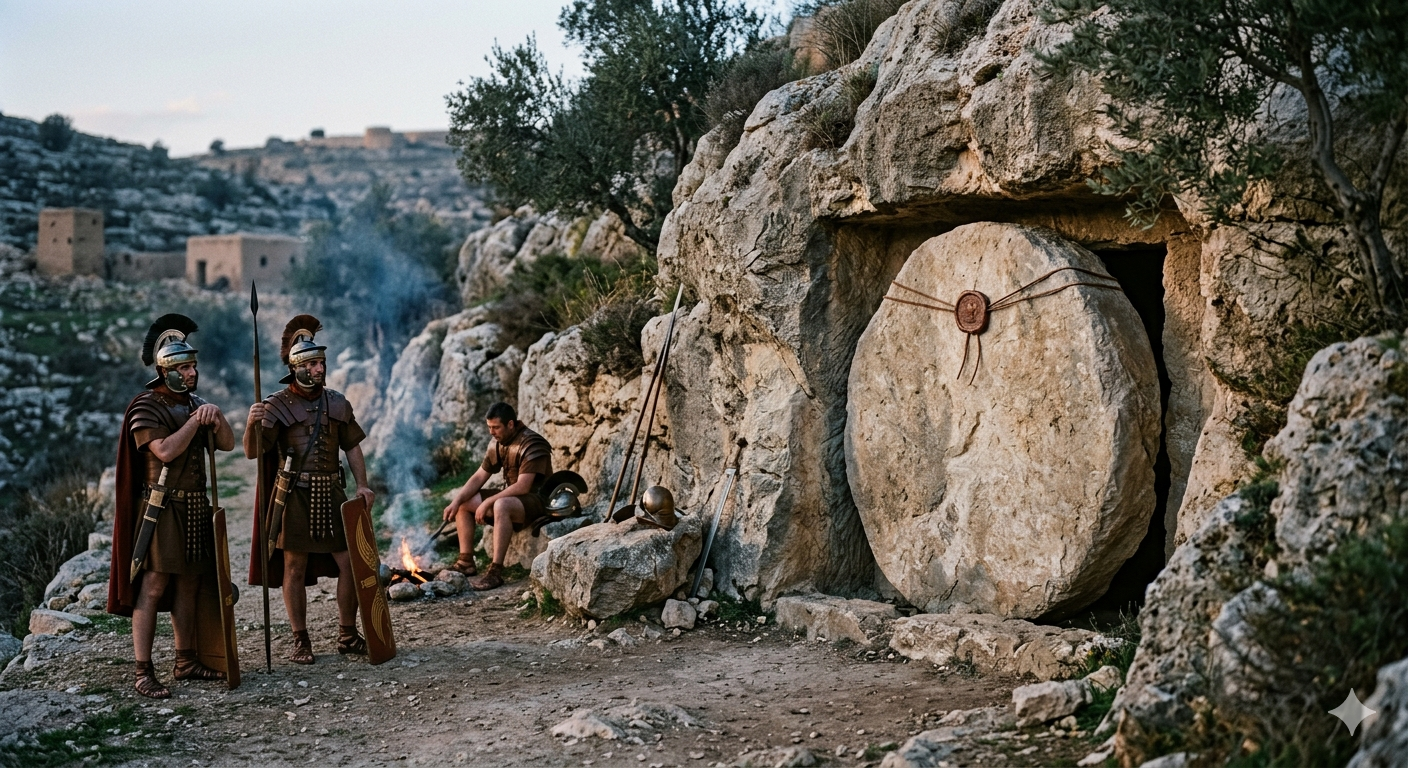
Between the Cross and the Empty Tomb
There is a sacred stillness that settles between the death and resurrection of Jesus Christ. We often rush from the sorrow of Good Friday to the triumph of Easter morning, but Scripture invites us to linger in the quiet mystery of what took place in between. These hours are not empty. They are filled with profound meaning, calling us to reflect on the depth of Christ’s work and the completeness of His victory.
After crying, “It is finished” (John 19:30), Jesus truly died. His body was taken down from the cross and laid in a borrowed tomb (Matthew 27:57–60). The One who spoke the world into existence now lies still in death. This is no illusion, no partial suffering. The Son of God fully enters the human experience, even to the grave. The weight of this truth should not be softened—He tasted death in all its reality.
Yet death does not hold Him in the way it holds us. Even as His body rests in the tomb, His spirit is alive in the presence of the Father. To the thief beside Him, Jesus had promised, “Today you will be with me in paradise” (Luke 23:43). And in His final breath, He entrusts Himself to the Father: “Into your hands I commit my spirit” (Luke 23:46). The separation of body and spirit marks true death, yet even here, Christ remains sovereign and secure in the Father’s care.
Scripture also gives us a glimpse into another dimension of this moment. We are told that Christ “went and proclaimed to the spirits in prison” (1 Peter 3:18–20). While this passage has been understood in various ways, it points unmistakably to a declaration—not of defeat, but of victory. The cross was not the end of Christ’s work, but its climax. In His death, He disarmed the powers of darkness, triumphing over them (Colossians 2:15). What appeared to be loss was, in truth, conquest.
The ancient confession that Christ “descended to the dead” reflects this reality. He did not bypass death; He entered it fully. He stepped into the domain that has long held humanity in fear and bondage. But He did not enter as a victim. He entered as a victor. As Ephesians 4:8–10 suggests, He descended in order that He might fill all things. The grave is not merely a place He visited—it is an enemy He overcame.
For us, this in-between time speaks deeply. It reminds us that God is at work even in silence. The disciples saw only loss. The tomb appeared to seal their hopes. Yet behind the veil of death, Christ was accomplishing what no eye could see—the final defeat of sin, death, and hell.
So too in our lives, there are seasons that feel like this in-between—moments where promises seem buried and hope feels distant. But the stillness of Saturday is not the end of the story. Because Christ has entered death and conquered it, even our darkest moments are not without purpose.
Between the cross and the empty tomb, we learn this: Christ does not avoid death—He transforms it. He does not merely pass through the grave—He claims victory over it. And because He does, those who belong to Him need not fear the silence. воскресения is coming.