
Love, Betrayal, and the New Covenant
The fifth day of Passion Week draws us into the most intimate and weighty moments in the earthly ministry of Jesus Christ. In the upper room, surrounded by His disciples, Jesus turns from public proclamation to personal preparation. What unfolds is not merely instruction—it is the unveiling of the heart of the gospel.
The evening begins with a startling act: Jesus rises, takes a towel, and washes the feet of His disciples (John 13:1–17). In a culture where such a task belonged to the lowest servant, the Teacher becomes the servant. This is not a mere lesson in humility; it is a living parable of His entire mission. The One who is Lord stoops to cleanse the unworthy. When Peter resists, Jesus responds, “If I do not wash you, you have no share with me” (John 13:8). The symbolism is unmistakable—cleansing is not optional; it is essential. And it is Christ Himself who provides it.
From this act flows a command: “Love one another: just as I have loved you” (John 13:34). This “new commandment” is not new in substance but in standard. The measure of love is no longer neighbor-love alone, but Christ-like, self-giving love. It is a love that serves, sacrifices, and endures.
Yet even in this sacred setting, the shadow of betrayal looms. Jesus identifies Judas as His betrayer (John 13:21–30), reminding us that proximity to Christ does not guarantee loyalty to Him. The table of fellowship becomes the place where treachery is revealed. Still, Jesus remains in control, moving steadily toward the cross with full awareness.
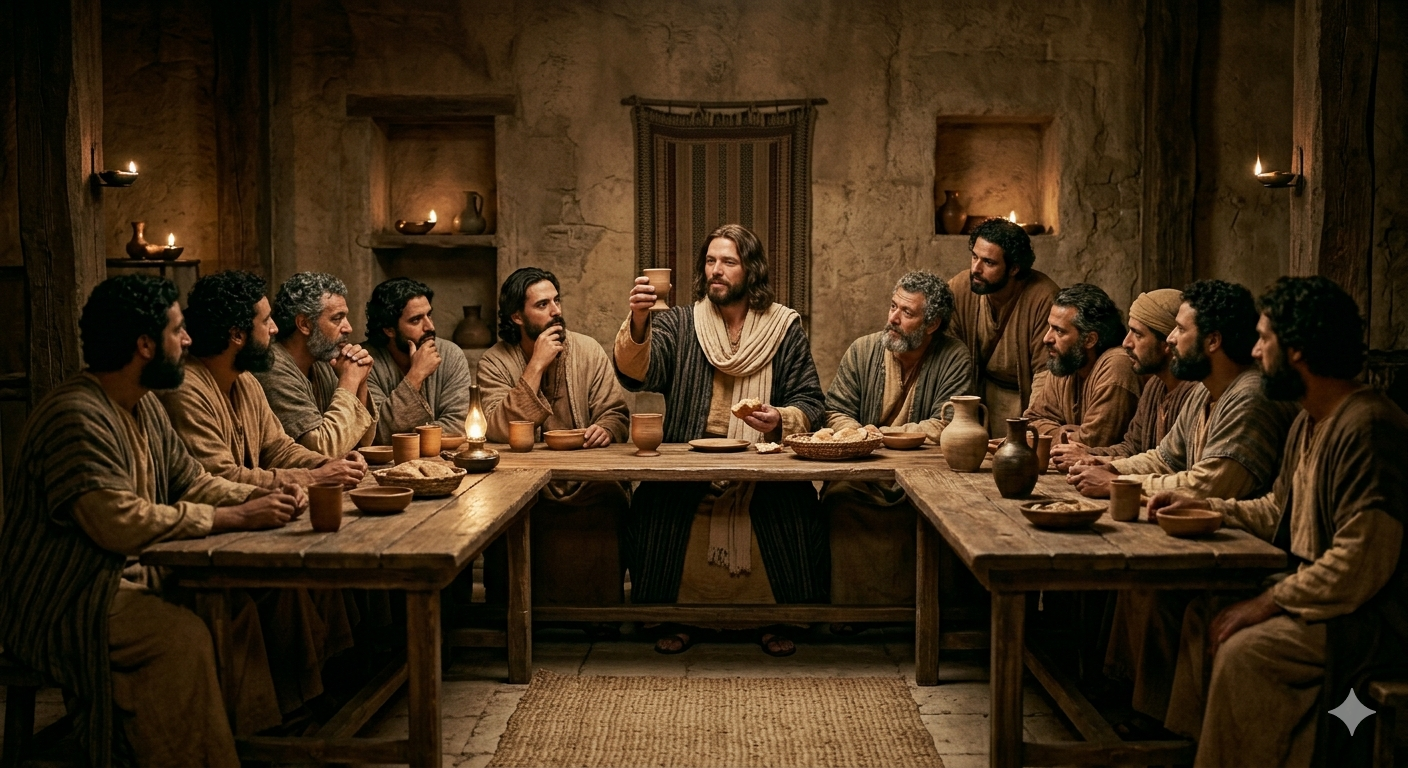
The meal itself becomes the foundation of a new covenant. Taking bread and wine, Jesus declares them to be His body and blood, given for His people (Luke 22:19–20). This is not symbolic alone—it is covenantal. Just as Moses sealed the old covenant with blood (Exodus 24), Jesus now establishes a better covenant through His own sacrifice. The Passover, long a remembrance of deliverance from Egypt, is transformed into a declaration of deliverance from sin.
In the extended teaching that follows (John 14–16), Jesus comforts His disciples with promises of the coming Spirit, urging them to abide in Him as branches in the vine. He prepares them for sorrow, yet assures them of joy. He speaks of peace, not as the world gives, but as a settled confidence rooted in His victory.
The night closes with His high priestly prayer (John 17), where Jesus intercedes for His disciples and for all who will believe. He prays for unity, sanctification, and perseverance—grounding their future not in their strength, but in His finished work.
Day five calls us to behold the depth of Christ’s love. It invites us to be cleansed, to abide, and to love as we have been loved. In the quiet of the upper room, the path to the cross is set—and the people of God are prepared to follow.